
How many times have you entered a website and navigated through layers of pages and drop down menus to finally find what you were looking for?
Or worse, got so frustrated with the ‘digging’ that you preferred to click away and try your hand with another search query?
I guess we all have our fair share of experiences from time to time, which drive us ‘nuts’. And amongst many, one clear ‘culprit’ owing to such ‘frustration’ is - our ‘attention span’ which is plummeting… and currently stands below than that of a goldfish!
We've indeed grown increasingly impatient in recent years. Nowadays, we like to cut through the clutter and get into the ‘meat’ of things we’re searching for, as quickly as possible.
This behaviour has posed new challenges for marketers to come up with seamless navigational designs for their home pages, along with content that is relevant and ‘intriguing’ enough to stretch visitors’ attention.
And so to the ‘rescue’, comes what we call ‘Microsites’ – an independent and dedicated content site, providing detailed information about a product or service, without distracting or losing visitors in the process of wading through layers of content, which is otherwise found on a typical, ‘all-encompassing’ brand website.
HubSpot defines Microsite as: A cross between a landing page and a “regular” website. Microsites are used when marketers want to create a different online experience for their audience separate from their main website. These sites often have their own domain names and distinct visual branding.
Here’s a shorter definition by Melissa Lafsky from Contently: A microsite is a branded content site that lives outside of the company homepage and/or brand URL.
At a glance, Microsites seem to resemble Landing Pages, but at a closer look you can see the differences as shown in the illustration from Instapage below:
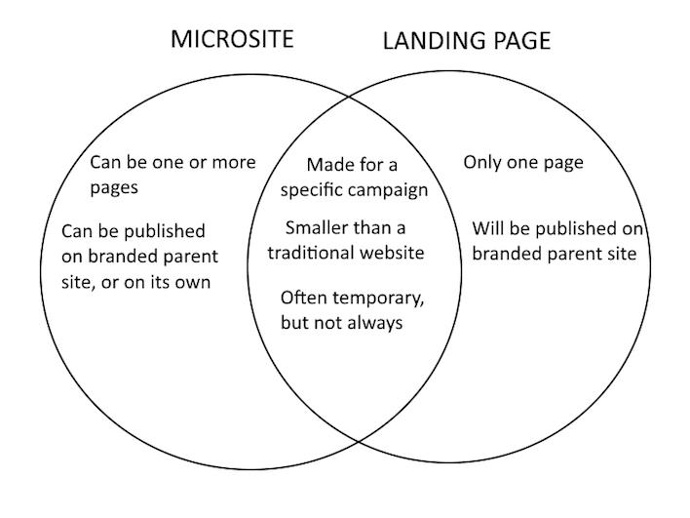
When marketers need to focus on specific campaign goals, microsites have without a doubt proven to be powerful marketing tools. A study has revealed that dedicated microsites could increase conversions as much as 50%
Some of the marketing objectives which microsites can be used to achieve, are:
- Promotion of an event or a product.
- Lead generation campaigns.
- Providing information about a time-specific event or an initiative.
- Announcement of a new product/software launch.
- Disclosure of a research study results/findings.
- Development of a niche client community.
Let's now look into some of the powerful examples of Microsites that have garnered huge success as Inbound Marketing Campaigns:
1. Domino’s Launch of New Product – Pizza Delivery Cars
Yes, the pizza giant has come up with its own car. The Chevy Spark pizza delivery cars go by the name of DXPs. The unique vehicle has been reengineered to accommodate an oven, space for 80 pizzas and storages for drinks and sauces.
And what better way to promote this awesome new service to pizza lovers than through a dedicated microsite, which gives a fun tour of the DXP’s features through animations and videos.
The interactive site (dominosdxp) also allows visitors to take a ride with the car and navigate around by selecting arrow buttons. 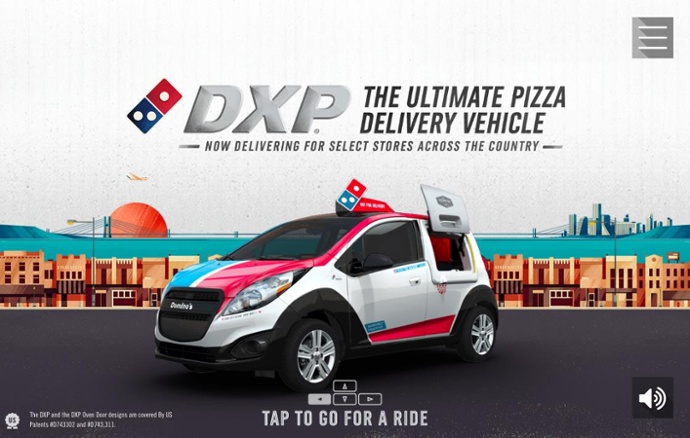
And if you’re interested to learn more about its specific features, you can always ‘zoom in’ to discover more. The microsite also cleverly engages the visitors by showcasing its various creative adverts including the story behind the ‘making of the DXP’.
All in all, Domino’s has nailed this promotional/branding campaign with its new product through a microsite that is innovative, informative and fun to engage with.
2. Dangers of Fracking – An Awareness Campaign with CTA
This campaign has been successful in advocating the FRAC Act (Fracturing Responsibility and Awareness of Chemicals Act).
The microsite campaign (DangersOfFracking), designed and initiated by an Industrial Designer Linda Dong, skillfully conveys a valuable environmental and social message on the dangers brought about by hydraulic fracturing.
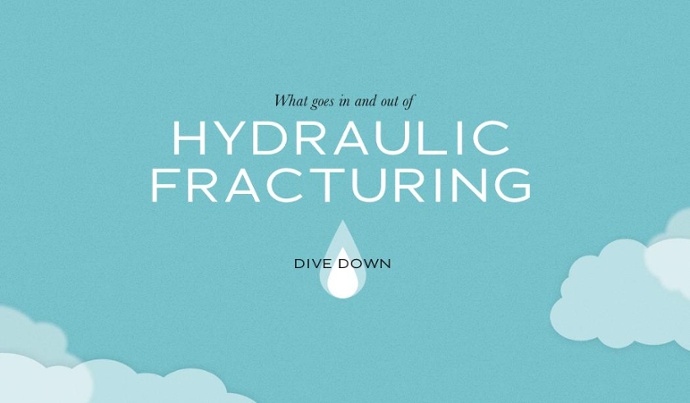
The simplistic yet focused design uses parallax movement and an engaging story of a ‘droplet’ that falls from the clouds as ‘directional cues’ - to take you all the way to the end, where two CTAs (Call-To-Action) nudge you to take action.
Visitors instinctively follow the water droplet which falls from the clouds and scroll down further to see the droplet being carried by a truck to a fracturing site, which again is turned into tracking fluid and pumped through a ‘gas well’ into the ground.
Along this journey, ‘floating’ facts and statistics on the dangers of fracking are displayed to enhance visitors knowledge on the harmful industrial practice.
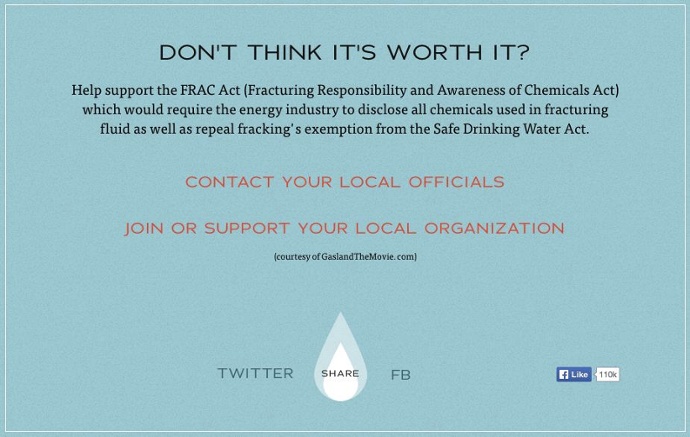
As shown in the above image, the site seamlessly guides the visitors to face two Calls-to-Action: "Contact your local officials" and "Join or support your local organization”, along with social media share buttons to increase the viewership.

3. Blendtec’s Will it Blend? - Product Campaign
Now who wouldn’t want to see an iPhone being blended into a pile of dust?
Yes, that’s the kind of experiment along with countless others, the ‘Will it blend?’ campaign is undertaking to promote its series of powerful blenders, via a dedicated microsite portal.
The site features YouTube videos of a ‘seemingly’ scientist in a white lab coat, blending materials which are generally ‘unblendable’, including; cassette tapes, CDs, cell phones, super glue, pens, silly putty… and almost anything under the sun.
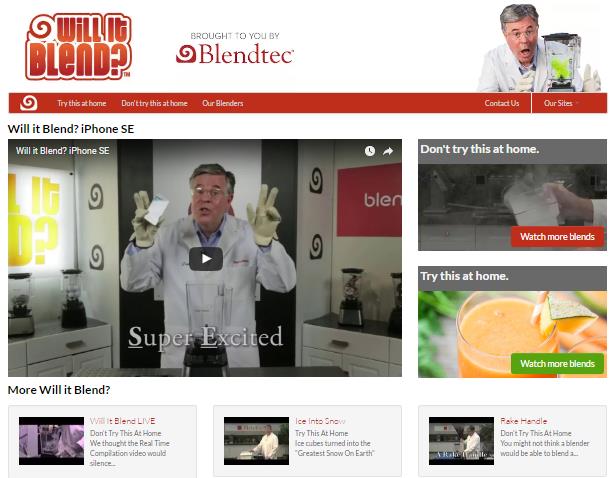
The campaign clearly is a super innovative, ‘out of the box idea’ arousing the curiosity of millions of viewers who will check out the video to simply see if ‘it’ really blends.
Though being ‘silly’ with a ‘humorous’ undertone, the brand has cleverly caught peoples’ attention and effectively established its name as a manufacturer of powerful blenders. The microsite also encourages viewers to share the videos/portal through social media share buttons.
The viewers are also given space to engage via social media by submitting their own ideas of ‘blendables’ to experiment for the show.
To sum it up…
As explained through the examples above, Microsites can be used as a ‘stand-alone’ yet immensely powerful marketing tool, to deploy a focused campaign in meeting your marketing and sales objectives.
If you'd like more assistance with your content or would like to discuss anything covered today, we'd love to hear from you.
Call Andy Fox (me) on (03) 5249 5570 or email andy@element7digital.com.au
Our Website is element7digital.com.au